Litha is a pagan celebration of the Summer Solstice or Alban Heruin held June 20th to June 23rd.
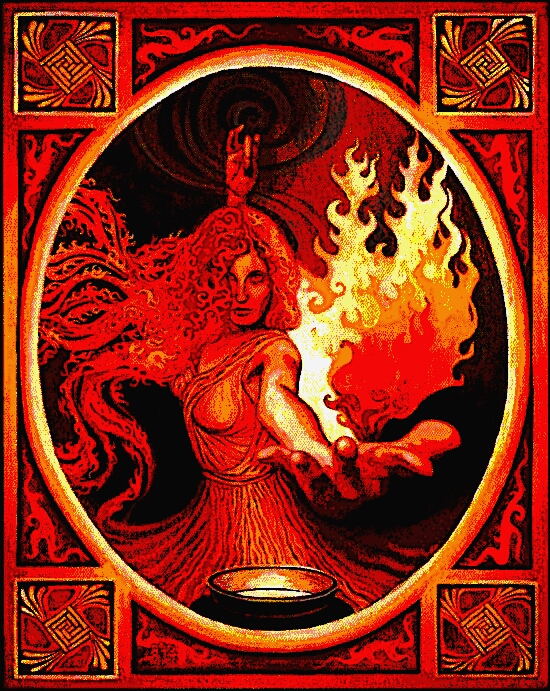
During Litha a fire festival is held to revere the Summer Solstice. The sun along with its energy and life gives warmth. It is an ancient pagan ritual and celebration welcoming the sun at its’ longest day of the year. The ancient Celts would light a wheel or ball of straw on fire and roll it down a hill. They also had bale fires. Fire, being magical in the pagan world, represents the sun and spiritual cleansing. A new beginning, a time of growth and prosperity. This was in honor of their Sun god or goddess to bless them with bountiful crops for the year. The element of fire in ancient times was used for divination to see future events.
In northern Europe where the winters are long and cold Litha is extremely important. It is a time to celebrate warmer days and nights, a time to grow and gather food such as berries and pick fruit from the fruit trees in preparation for the long cold winters. Plants and herbs were picked for tea and magical healing.
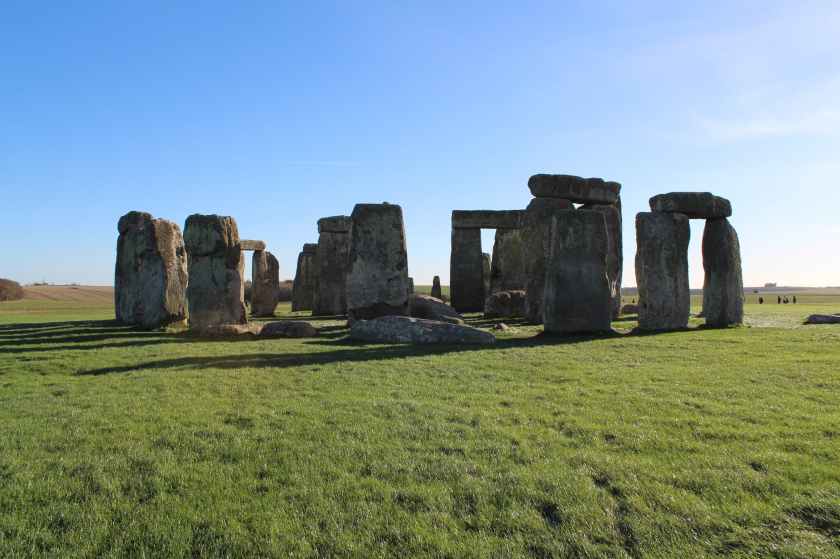
Some of these rituals are still held at Stonehenge as the stones represent the rising of the sun at its highest position in the wheel of the year.
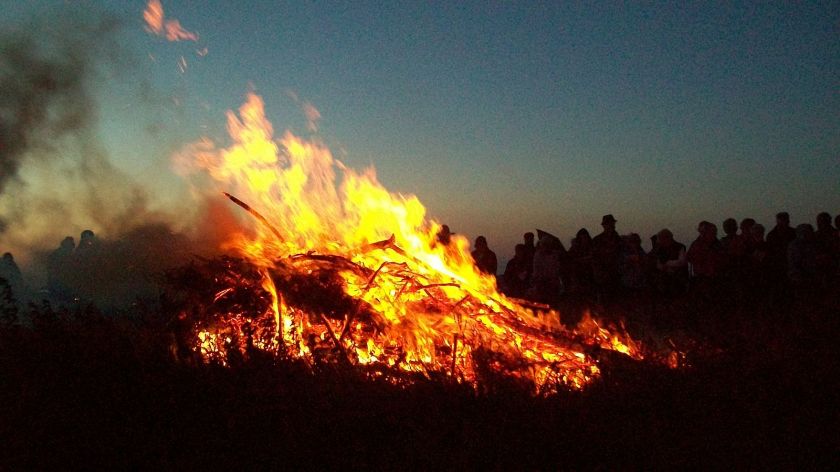
Magical rituals include lighting a candle,with respect for the Summer Solstice. Crafting a protective amulet. Another ritual is dancing and singing around a bonfire, blessings with honey or mead. Creating flowers and flower wreaths to wear on top of their hair for men and women. Picnic feasts are popular among pagan families this time of year.
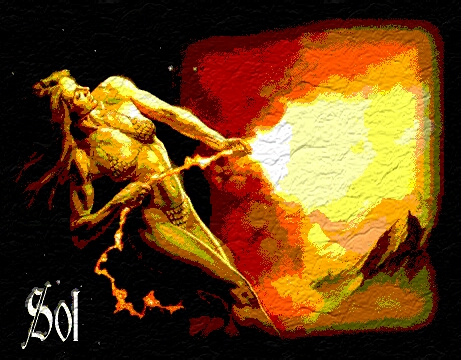
While many pagans celebrate the sun as a masculine energy, Norse pagans saw the sun to represent Sól or Sunna a Norse female goddess of the sun while her brother Máni represents the moon god.
According to Norse folklore, A person named Mundilfari who had two children, they had very light colored hair and skin that he named one Máni meaning Moon and the girl child was named Sól meaning Sun. Once Sól grew up her father Mundilfari betrothed her to a mortal called Glenr. This cheeky act of Mundilfari infuriated the Vanir so much that they snatched Sól and her brother Máni and placed them in the sky. Sól was forced to drive the horses named, Arvakr ( Early riser) and Alsvidr ( Most Rapid) that carried the Sun (created from molten pieces from the Muspell world and to kindle the nine worlds by these Vanir gods and goddesses. Two bellows were set under the horses shoulders to keep them cool. Sól is chased by the wolf Sköll meaning (One who mocks). He is the offspring of Fenrir the notorious Arch wolf and is Loki’s offspring. The legend dictates that Sköll will devour Sól during the apocalyptic Ragnarock.
Several Pagans marry this time of year similar with the spring Beltane. Some rededicate themselves to the lord and lady following timeless tradition. The traditional incense for Litha is sage, lemon, rose, wisteria, mint, sunflower and basil. Sacred gemstone for the Summer solstice Litha is ruby, red like the midsummer fires.
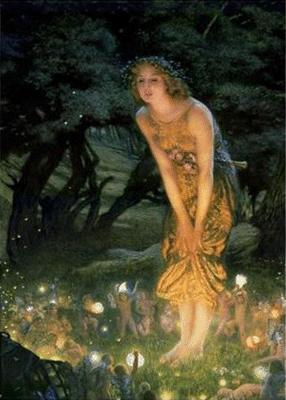
Litha is also the time of year the Fae are very active, remember not to step into a fairy ring or you may be whisked away down into their other-world and you will never place foot in this world again!
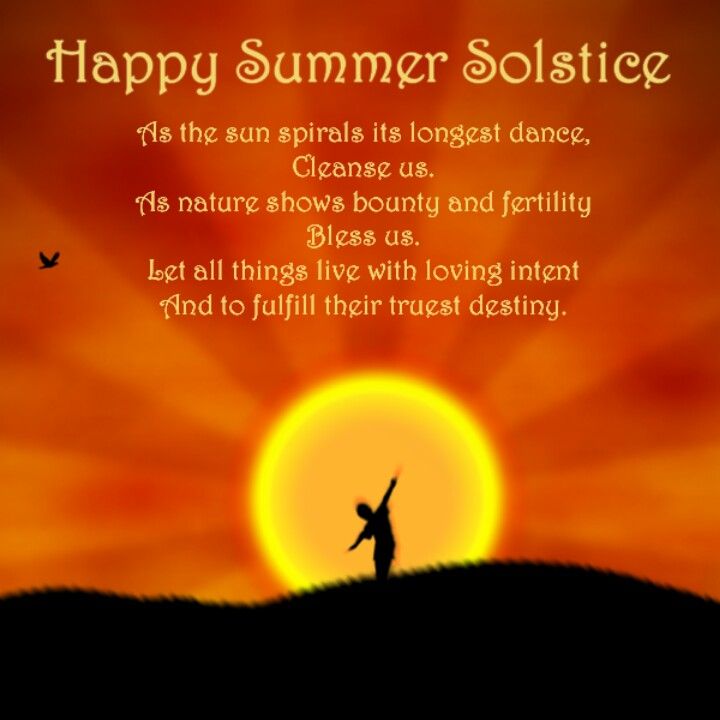
If there are many falling stars during a clear summer evening, expect thunder. If there are none, expect fine weather. – Author Unknown
Source and Reference:
- Snyder, Russell. (2014-06-16) Enjoying Midsummer the Finnish way – thisisFINLAND. Finland.fi.
- Grimm, Jacob (1883). Teutonic Mythology, Volume 2. George Bell & Sons.
- Hutton, Ronald (1996). The Stations of the Sun: A History of the Ritual Year in Britain. Oxford University Press
- Above illustrations and photos in Public Domain.


Reblogged this on lampmagician.
LikeLiked by 1 person
Reblogged this on blackwings666.
LikeLike