
Jataka Tales are folk tales from India, they tell of the reincarnated lives of Guatama Buddha who was the founder of Buddhism, he taught over a 45 year period. He lived in the eastern part of India sometime between the 6th and 4th centuries BCE. His given first name was Siddhartha a Prince, who came from a royal family. He could not stand to see the suffering and toil of the poor and wished to help them.
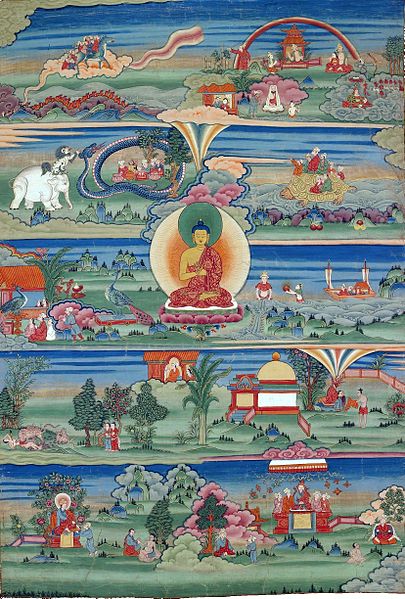
Guatama Buddha taught a Middle Way between drastic self-restraint and extreme permissiveness. He is the main character in Buddhism. He ascended to peak illumination he had accomplished Buddhahood. He shared his teachings to his students to help stop the suffering and rebirth in this world. He passed down oral tradition and writings of these teachings and tales were written 400 years later.
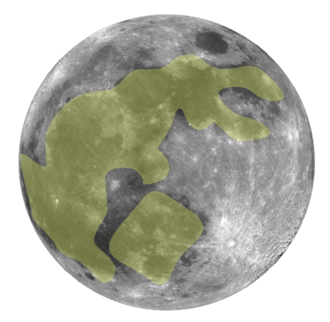
The Jataka Tales from India tell of the many previous lives of Buddha. They teach morals similar to the Greek Aesop’s Fables. In these tales Guatama Buddha is referred to as “Bodhisattva,” since he has not yet accomplished his full-blown Buddha enlightenment. The Hare in The Moon originated from the Pali Canon as the Sasa Jataka and in the Jatakamala of Arya Sura. The famous Man in the Moon that forms the moon’s face was seen as a Hare image in the moon in Asian culture.
Sit back and enjoy this endearing tale of a very charitable Hare and his three friends.
The Hare in The Moon
Once upon a time the Bodhisattva was reincarnated as a hare. He inhabited a lush green forest among soft grass and fancy ferns, amidst crawling vines and succulent indigeous orchids. The lush beryl woods was framed by a beautiful blue-green river like an Aquamarine gem stone.
This particular jungle was a spiritual refuge for mystics who wander far away from the world to heed their spiritual calling and to reflect on it. These mystics survived on the food given to them by the benevolent villagers. The villagers gave alms joyfully as it was considered their divine duty.
The Bodhisattva hare was blessed with three companions, an otter, a monkey and a jackal (sometimes a fox in other versions) The three friends looked to the hare as their leader. The wise hare taught them the gravity of the giving of alms, how to observe the holy days and keep the moral laws. The Hare on the Hallowday encouraged his friends to be generous and give their own food when a hungry person in need asked for food.
One Hallowday Sakra, lord of devas observed the four companions from his lofty, palace made from marble built on the peak of Mount Meru. Sakra made a decision to test the friends virtue. During that day the four companions decided to separate in search for food. The otter discovered seven redfish on a riverbank; the monkey picked mangoes from the trees while the jackal came across a lizard resting beside an abandoned container of sour milk.
Sakra transformed into a Brahman (priest) and he said to the otter, “I am hungry friend. I need some food so I can achieve my priestly duties. Can you help me?“ The kind otter offered the seven redfish that he had collected for his own meal.
Next the Brahman went to the monkey and said ” I am hungry friend, I need food so I can achieve my priestly duties. Can you help me?” The generous monkey donated to the Brahman the ripe mangoes that he had desired to eat for himself.
Again, the Brahman went to the jackal and said ” I am hungry friend, I need food so I can achieve my priestly duties. Can you help me?” The benevolent jackal donated to the Brahman the sour milk and the lizard which he had planned to eat for his own meal.
Soon after, the Brahman went to the hare and asked for food, but the hare had no food. The hare only ate the lush green grass that grew in the forest. So the Bodhisattva told the Brahman to build a fire, and when the fire began burning , he said “I have nothing to give you to eat but myself!” Then the unselfish hare hopped into the fire.
Sakra was still disguised as a Brahman. He was totally surprised and deeply touched by the hare’s chivalrous act. He immediately quenched the fire so the dear hare was not burned from the flames. Sakra revealed his true form to the noble hare. “Dear friend,” he said, “Your virtue will be remembered throughout the ages.” Next, Sakra painted the enlightened hare’s image on the pale face of the Moon for everyone to view forever.
Sakra returned to his magnificent palace on Mount Meru, and the four furry friends lived out their long and happy lives in the lush green forest. To this day, when you look up at the full moon you can see the image of the self-sacrificing hare.
The End.

Indian Hare Photo above: credit to N.A Nazeer Public Domain
Sources & References:
*John Strong (2004). Relics of the Buddha. Princeton University Press. ISBN 0-691-11764-0.

 Nifty Buckles (Valerie Hopkins) Author of enchanted tales, folklore & magic • Once famously chased by vampire pumpkins. Brand Architect of The Darwind5 VAWT