
Don’t you just love Unicorns? I do. I was fascinated with these eloquent, strong, equine creatures of antiquity since early childhood.
Unicorns were known in myths to be magical creatures that were authentic and journeyed along inbetween cosmos. The wildest Unicorns were only touched by Virgins.
Below Photo of Chinese Qilin Statue in Summer Palace, Public Domain

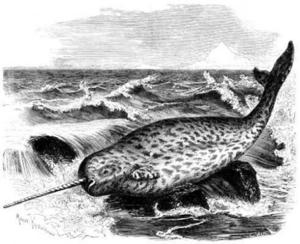
Asian Unicorns such as the Qilin from China and the Kirin from Japan. Narwhals may be the original inspiration for the Unicorn, the tusk of the Narwhal was sold as the Unicorn horn in the past. Many Ancient Greek scholars wrote on the illustrious Unicorn such as Pliny the Younger, Ctesias and Strabo to list a few.
Below Illustration: Historical depiction of a narwhal from ‘Brehms Tierleben‘ (1864–1869) Public Domain.
Unicorns may have also evolved from Elasmotherium that roamed Siberia 39,000 years ago.

Above Illustration: First published restoration (1878) of E. sibiricum, by Rashevsky, under supervision of A.F. Brant
Unicorn lore is located around the world from Asia, Persia, Turkey, Siberia, including the United Kingdom. Unicorns were early environmentalists as their great horn purified the water wherever they went. The Unicorn symbol represented pure water of river, lakes and streams. According to Unicorn myth its horn could remove poisons once the tip of its horn touched liquids. Its unique power to cleanse water was noted in Physiologus 14th century exposition. A snake had poisoned the water at a massive lake that quenched the thirst of several animals. A lovely Unicorn approached the lake and with its great horn made the sign of the cross thus sanitizing the toxic water so the animals were able to safely drink from the lake.
During the medieval times Unicorn horns were also known as Alicorns used to heal all types of maladies. Royal Alchemists would use them in their super energized plant based antidotes. It was known to fight plagues and counteract snake and scorpion venom.
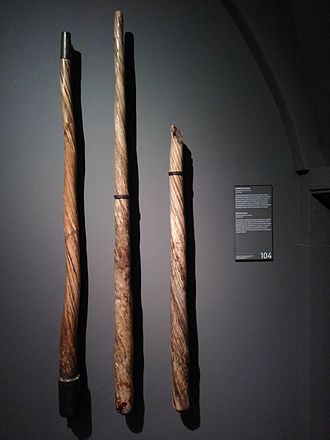
Below photo: Three Unicorn horns from the Mariakerk in Utrecht, now on display at the Rijksmuseum.
The 12th century abbess Hidegard of Bingen kept her written medical journals, noting alicorns were used to treat Leprosy when mixed with eggs. Leather from the Unicorn was crafted into a belt to ward off plaque and fevers. Leather shoes from the Unicorn would heal Gout and other foot ailments.
Unicorns are found in several flags and coat of arms in Europe and United Kingdom.
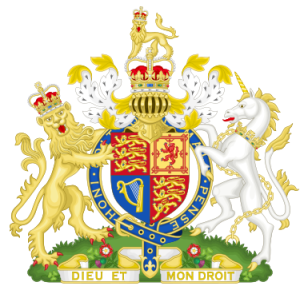
Above: Royal Coat of Arms, Elizabeth 2nd in Right of the United Kingdom. Public Domain.
Sources & References:
- Hildegarde, B. (1989). Le Livre des subtilités des créatures divines. II. Paris: Millon.
- Odell Shepard, The Lore of the Unicorn at Amazon.com https://www.amazon.com/exec/obidos/ASIN/B002FL4WSI/internetsacredte
- Perry, J. (2016) ‘Real ‘Siberian unicorn’ remains found.’ http://www.cnn.com/2016/03/29/living/real-unicorn-remains/
- Godfrey, L. S. (2009). Mythical creatures . Chelsea House Publishers
- Fisher, Alice (2017-10-15). “Why the unicorn has become the emblem for our times | Alice Fisher”. the Guardian.
- Featured Art by Salvador Dali (1941-1989) “The Happy Unicorn.” 1976. Public Domain.


Fascinating! I didn’t realize unicorns were quite so widespread across the world. And if I ever get the plague I’ll now know what to do…
LikeLike
Reblogged this on lampmagician.
LikeLike