
The Spring Equinox March ushers in a joyful Spring celebration.
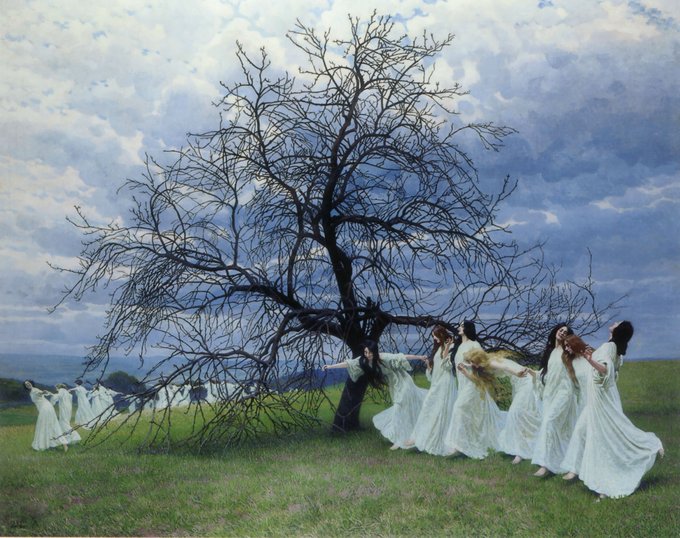
Art by Maximilian Lenz
The word March is from the Roman word ‘Maritus,‘ meaning War. The historic event The Ides of March, originated from Julius Caesar’s assassination on March 15th. Mars is known as the planet of War in Astrology.
Hares begin their mating boxing ritual which may look like madness to people.

Credit: Duncan Usher/ardea.com
The old English term, “Mad as a Hatter!” was popularized by 1837. It referred to the top hat crafters called ‘Millners’ who had consistently inhaled mercury vapors while placing lead weights in men’s classic top hats. This mercury poisoning caused serious neurological damage to the Millner’s brain and nerves. It may have even effected men who wore their top hats over a long period of time.
By 1837, “mad as a hatter” was a common saying. Lewis Carroll depicted his fictional character, the Mad Hatter in his book ‘Alice’s Adventures in Wonderland.‘ who seem to depict the signs of this illness..

The March Hare and the Mad Hatter stuff the Doormouse’s head in a teapot, illustration by Sir John Tenniel 1865
Further back in time…
The Ancient Celts revered the Spring Equinox on the full moon of the Spring Equinox month. The Spring Equinox also called Vernal Equinox was revered by the ancient Celtic and Saxon pagans for centuries.

Above Illustration: Ostara (1884) by Johannes Gehrts
Ostara is the name of the pagan Anglo-Saxon Spring goddess, she represents dawn. Ostara manages nature with the aid of The Horned god, securing the growth of budding plants, and fertility of nature while celebrating the welcome of the Spring equinox through dance. Below shows Ostara on the pagan wheel of the year.

Ostara or Eostre is the namesake of the festival of Easter that ushers in spring and fertility.
In ancient times, Eosturmonap also known as the month of April. Eostre or Ostara feasts were held in her honor by pagan Anglo-Saxons. Ostara was mentioned early in ‘The Venerable Bede,’ 673-735 Ce.
The Christian Paschal month usurped Ostara and changed it to ‘Easter’ to celebrate the Christ resurrection or Spring Sun rebirth. During the Christian takeover of pagan Europe from the 7th to 15th centuries. Pagans were persecuted, burned at the stake and forced into Christianity.
Jacob Grimm discovered evidence that Anglo-Saxons once revered Austra an old Norse fertility goddess. Her cult of the goddess was located in the Southeast region of England.
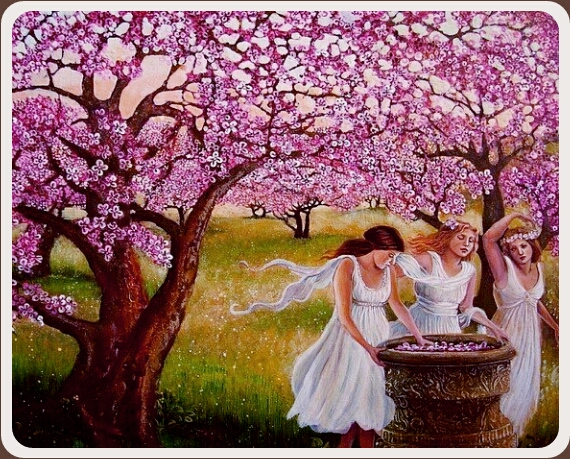
Today more and more NeoPagans and Wiccans have returned to their ancestral, nature religions that embrace the rule of natural law, that is sustainable and compliments mother earth. The brown hare and eggs accompany Ostara to usher in the Spring Vernal celebration.
Symbols of Spring:
The European Brown Hare also known as the ‘March Hare’ awakens out of its winter slumber to embrace the warm earth and graze on grass and clover robustly, after a long frigid winter.

Eggs:
Folklore cites one can stand a raw egg on the end of the exact time of the Spring Equinox.
Eggs of Spring Hares in Public Domain.

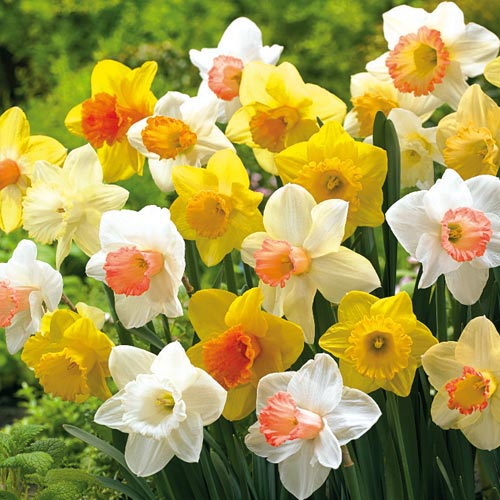
March flower is represented by the Narcissus also known as Daffodil
According to folklore, daffodils are famous for bringing good fortune. An old tradition cites that if one makes the resolute effort not to trample on daffodils, Lady Ostara will award one with abundance and good luck. Daffodils are noted as the flower for those born in March.
Daffodils open a doorway to light and positive energy between the physical world and the Other-world. These cheery flowers represent Springtime,fertility, rebirth, they usher into our physical realm benevolent entities of light such as faeries and angels.
According to folklore, always give Daffodils as a bunch. A single Daffodil given to another will bring bad luck to the receiver. In some parts of the UK neighborhoods, folks who are the first to sight a Daffodil will be blessed with abundance.
Source & Reference:
- Shaw, Pagan Goddess in the early Germanic World, 49-71.
- Holly, T. (2001). “Mad World of the European Hare”. In MacDonald, D. The New Encyclopedia of Mammals. Oxford: Oxford University Press. pp. 710–711. ISBN 0-19-850823-9.
- Old Farmers Almanac 1792
- Pictures in Public Domain
- http://www.Vicnews.com
 Nifty Buckles (Valerie Hopkins) Author of enchanted tales, folklore & magic • Once famously chased by vampire pumpkins. Brand Architect of The Darwind5 VAWT